Smart by Design: How AI Is Creating the Next Generation of Devices
-
by Admin
-
February 18, 2026
-
214 comments
-
5 Minutes read
-
122 views
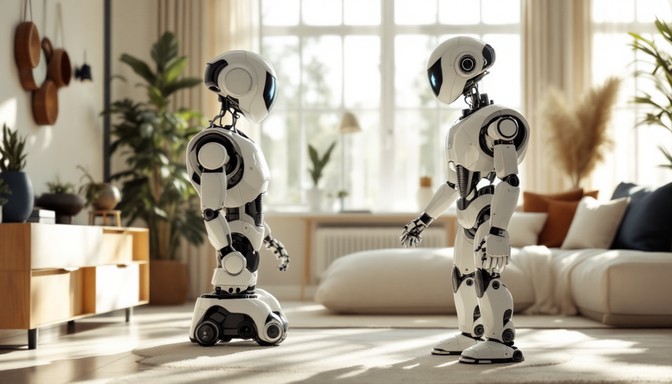
When you hold your next smartphone, drone, or laptop, there’s a strong chance it won’t just be "engineered" by people. It will be designed by artificial intelligence. AI is no longer just an invisible force behind apps and smart assistants; it’s now shaping the very form, function, and feel of the gadgets you use. As AI continues to evolve, the traditional process of gadget creation is being revolutionized. Get ready to meet devices that aren’t simply human-made, they’re machine-curated masterpieces tuned precisely to your needs, wants, and habits.
How AI Is Shaping the Design of Your Next Gadget 2026
The next time you pick up a smartphone, drone, or laptop, there’s a strong possibility that artificial intelligence played a major role in its creation. AI is no longer limited to powering apps or virtual assistants; it is now actively influencing how devices look, feel, and function. The traditional product development process—once driven solely by human creativity—is evolving into a collaboration between engineers and intelligent algorithms
We are entering an era where gadgets are not just designed by people but optimized by machines, carefully crafted to match your habits, preferences, and lifestyle.
AI-Driven Design Platforms
Modern tech companies increasingly rely on AI-based design systems to create innovative products. Instead of manually sketching every concept, designers now provide AI tools with specific requirements such as weight limits, durability standards, material choices, and performance targets. The AI then generates thousands of potential designs within minutes
This process, often referred to as generative design, explores possibilities far beyond what a single human team could imagine. In industries like aerospace and automotive engineering, AI has already helped create lighter components and stronger structures. That same intelligence is now shaping consumer gadgets, making them thinner, stronger, and more energy-efficient
Rather than randomly producing shapes, AI simulates real-world conditions digitally. It stress-tests designs, adjusts weak points, and fine-tunes structures before a physical prototype is even built. The laptop or drone you purchase may have gone through thousands of virtual trials before reaching your hands.
Understanding Consumer Preferences Through Data
In the past, companies relied on surveys, focus groups, and trend forecasting to predict what customers wanted. Today, AI analyzes vast amounts of online behavior—search patterns, reviews, social media discussions, and shopping data—to uncover hidden preferences.
When a new smartphone launches with a specific color option, camera layout, or screen size, those choices are often influenced by AI-powered data analysis. Algorithms detect patterns in consumer feedback and anticipate demand before trends become obvious
AI doesn’t just study functionality; it also evaluates emotional responses. It identifies which designs create a sense of luxury, comfort, or status. The smartwatch that feels perfectly balanced on your wrist or the earbuds that deliver precisely tuned audio may be the result of millions of data points analyzed behind the scenes
In many cases, AI influences not only how products are designed but which products are developed at all. If data reveals rising interest in rugged outdoor devices, companies may shift entire product strategies accordingly.
Gadgets Already Enhanced by AI
Many devices on the market today already reflect AI-driven design improvements. Modern drones, for example, are built using aerodynamic simulations that allow them to glide more smoothly and efficiently. Instead of relying solely on traditional modeling, manufacturers use AI to simulate countless flight conditions digitally
Wireless earbuds are another example. AI helps refine their ergonomic shape and optimize sound quality by analyzing audiology data from large populations. The result is a listening experience that feels personalized, even though it is mass-produced
In laptops, AI contributes to thermal management and structural optimization. Virtual simulations allow manufacturers to reduce overheating, minimize weight, and extend battery life without compromising performance. By the time a device reaches production, it has already been refined through countless digital experiments
In essence, AI accelerates innovation by combining rapid experimentation with precise optimization.
Challenges and Ethical Considerations
While AI-driven design offers remarkable benefits, it also introduces challenges. Algorithms learn from existing datasets, and if those datasets lack diversity, the resulting products may unintentionally favor certain groups over others. Issues related to ergonomic design, accessibility, and usability can arise if inclusivity is not prioritized
Accountability is another complex issue. If an AI-generated design leads to product failure, determining responsibility becomes complicated. Is the fault with the engineers, the company, or the developers of the AI system? Legal frameworks are still catching up with these technological advancements.
There is also the concern of uniformity. Because AI often optimizes for efficiency, different brands may end up producing devices that look and function similarly. Over-optimization could potentially reduce creative risk-taking, making products feel standardized rather than distinctive.
The Future of Autonomous Design
Looking ahead, AI could move beyond assisting designers to independently generating customized products. Imagine visiting a website, entering your preferred smartphone size, battery life, features, and style, and receiving a fully personalized blueprint within minutes
Advanced AI systems could run virtual stress tests, adjust internal components, and finalize production details automatically. Manufacturing lines powered by adaptive automation could then build a device tailored specifically to you
This shift would transform customization from a luxury feature into a mainstream expectation. Instead of selecting from pre-designed models, consumers may one day order devices uniquely engineered to match their daily routines
However, greater automation requires stronger safeguards. Transparent policies, clear accountability structures, and ethical guidelines will be essential to ensure AI-driven design benefits society as a whole.
A New Partnership Between Humans and Machines
The rise of AI in gadget design does not signal the end of human creativity. Instead, it represents a new partnership. Human designers set the vision, define the goals, and establish ethical boundaries. AI then expands the range of possibilities, processes enormous datasets, and identifies the most efficient solutions
The result is a new generation of devices that combine imagination with computational precision. These gadgets are smarter, lighter, and more personalized than ever before
As artificial intelligence continues to evolve, the products you hold in your hands will increasingly reflect a blend of human intent and machine intelligence. Innovation will become less about guesswork and more about data-driven refinement
The future of gadget design is not just automated—it is adaptive, personalized, and continuously learning. And the devices of tomorrow may understand your needs even before you fully articulate them yourself.
POPULAR BLOGS